


Qovery Demo Day Summary - May 2022


Agenda
5min: Qovery quick intro
10min: What we worked on last month
5min: Docker Build Improvements demo
5min: Terraform Improvements demo
5min: What's coming next
10min: Q&A
Qovery quick intro
Qovery's DevOps automation software is the simplest way to deploy your apps on AWS. More than 20 000 developers use Qovery to deploy their apps on AWS.
Qovery builds your apps and integrates them into your CI. Developers are autonomous to make their applications run before releasing.
With Qovery, developers can deploy their applications in dev, staging, and production environments. Every push is deployed.
DevOps get a production-ready platform in 30 minutes on AWS, which lets them manage and control their infrastructure.
The Qovery Engine operates and runs on top of Kubernetes in your cloud account. It is open-source and ready to be fine-tuned as your need grow.
What we worked on last month
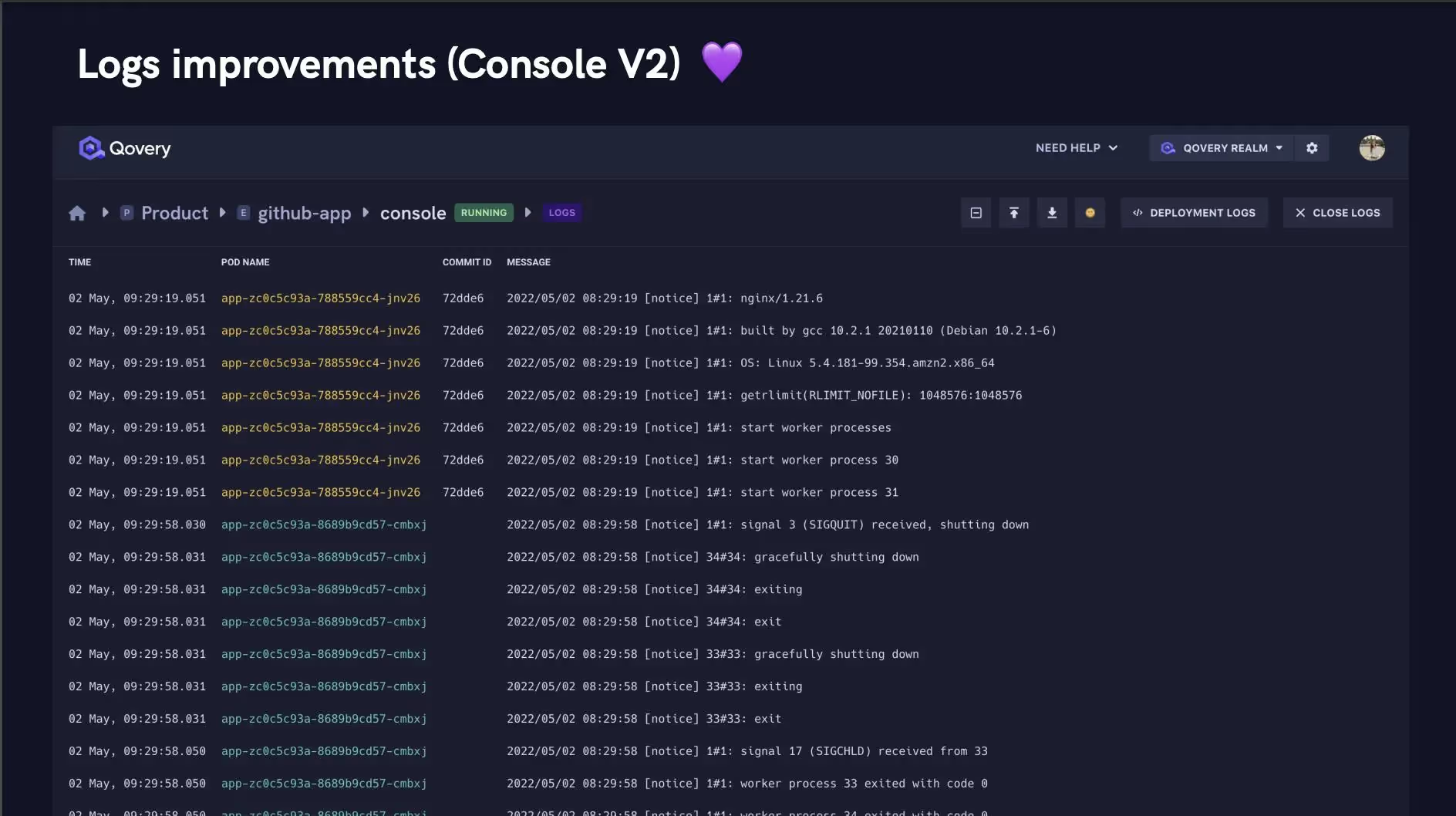
Logs improvements (Console V2)
Our logs were missing a bit of magic, so we decided to dedicate a bit of time to:
- change columns order
- add colors to the pod name
- add commit id
- add filtering by pod name
In this changelog, you can find more information about how to filter the pod by name.
Bug sprint
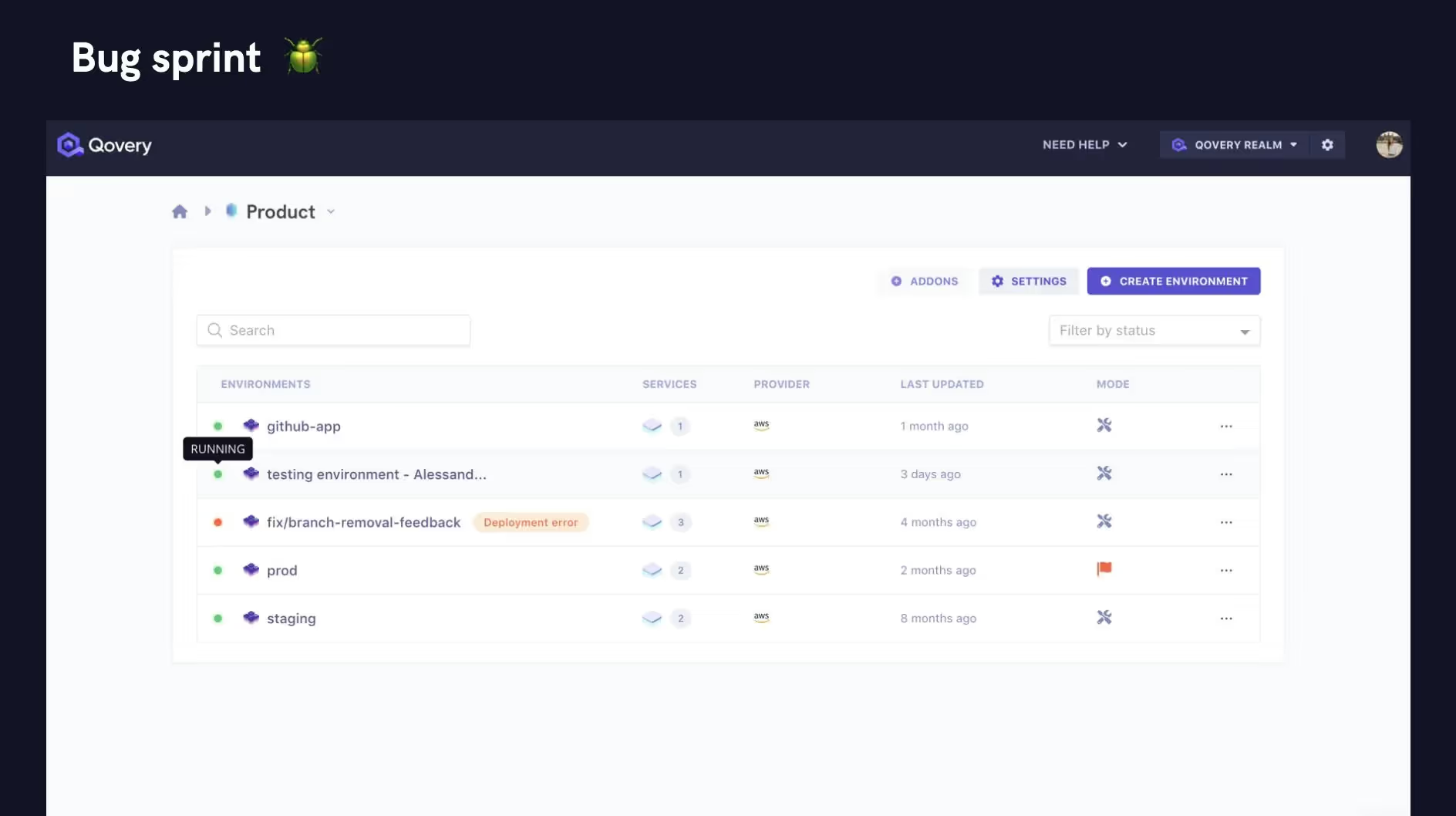
Our Frontend and Backend teams dedicated a particular sprint to bug hunting and improvements during two weeks! Why is that? Well, I made an entire article about it a few weeks ago!
Docker Build Improvements demo
Romain (Software Engineer at Qovery) made a significant improvement for Docker Build; in this video you can find all the changes that has been done in the code.
Terraform Improvements demo
Our team shipped the Qovery Terraform Provider in February, but we realised that many improvements could be made, so we dedicated a part of a sprint to make it even better. Bilel (Software Engineer at Qovery) showed us the improvements made to the Qovery Terraform Provider; you can find all of it in this video, but otherwise, here is a small summary of what has been done:
- Add the VPC peering feature to the cluster
- Use Qovery’s API token
- Use instance type to create the cluster instead of CPU/ RAM
- Add build-in environment variables to the application, environment and project
- Add secrets to the application, environment and project
- Various bugs and fixes and stability improvement
- Functional tests
What's coming next
Qovery V2
- [API] Advanced Settings
Since the demo day, this feature has been shipped already (I know, our team is blazing fast).
Qovery already allows you to customize quite a lot of parameters in your application (RAM, storage, Networks…); for most of our clients, it’s more than enough to have their applications up and running the way they want, but we are aware that some specific industry or more prominent companies might require more, that’s why we created the advanced settings: a section that you can find in the API only for now.
Nb: the section will grow within the next sprints. - Add environment and application status
In development, as we are speaking, this feature will allow you to know what is the current status of your service so that you can verify why your application is having problems and also understand what is the current status of your environment so that you can ascertain why one or more of your applications are having problems. - Support applications creation for image registry
For this one, the development just started as well, and it will allow you to create your application directly from an image registry so that you don't have to build the application via Qovery.
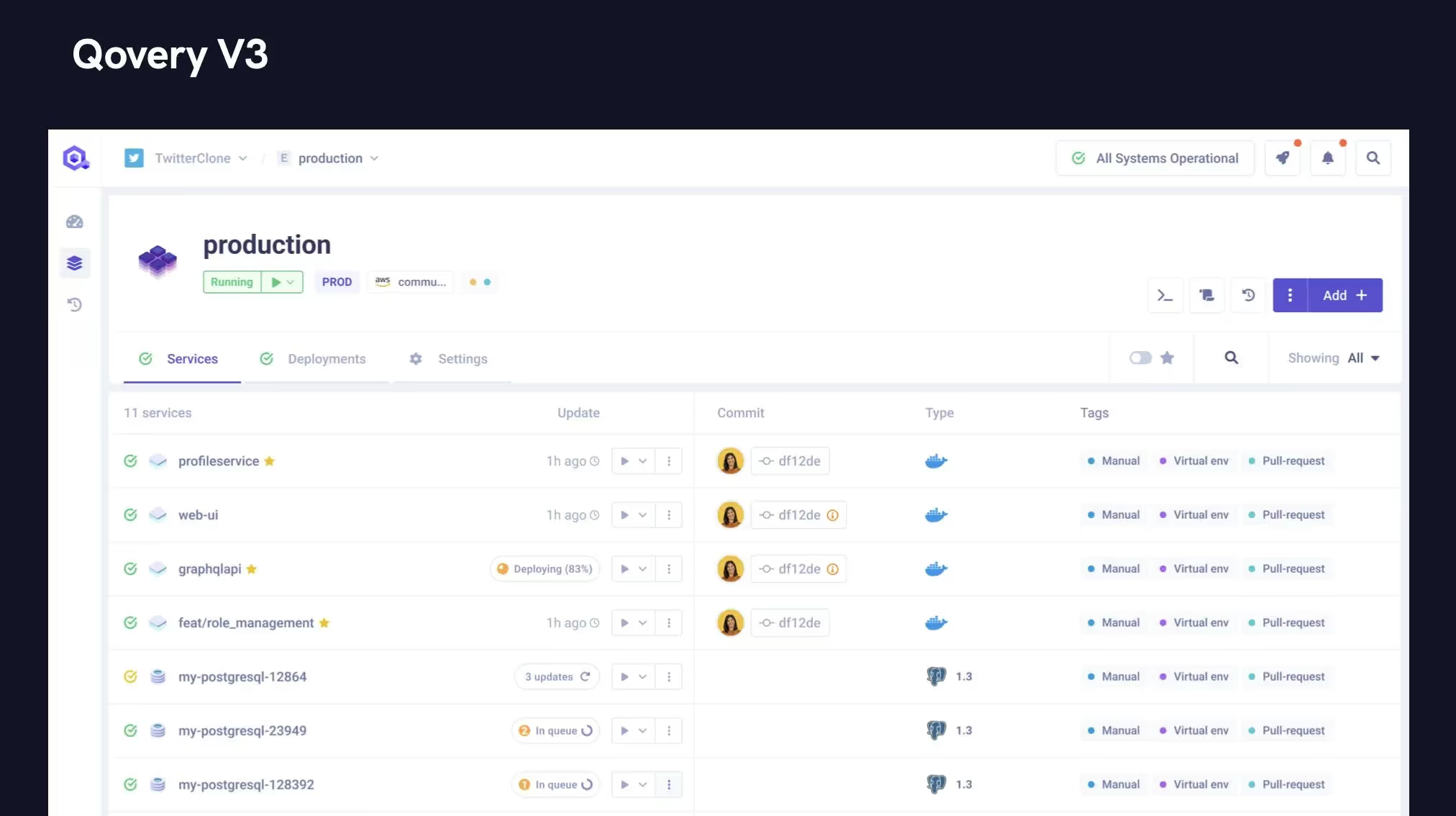
Qovery V3
On top of maintaining the V2 and adding essential features, our team is also working hard on the V3. Last month was very exciting because the team focused on implementing the layout and the first routing to manage the navigation system, so we could see a first glimpse of the V3 and test it ourselves; we can’t wait for you to try it out too.
You will be able to beta test the V3 in a few weeks; contact us if you want to be included.
Wrapping up
With more than 400 views on our last Qovery Demo Day, we thank you for your trust because our product, team, and vision would not be possible without your support. If you have any questions, don’t hesitate to contact us or directly on the chat from our website, and we’ll see you for the next Qovery Demo Day. 💜
If you want to see the replay of our live event, it’s happening right below 👇🏻


.svg)
.svg)
.svg)

Suggested articles

Struggling with Kubernetes configuration sprawl and long deployment queues? Discover how to identify technical vs. workflow bottlenecks and why shifting to a self-service Kubernetes management platform like Qovery is the key to scaling your engineering velocity.


Following the end of maintenance of the Ingress NGINX project, we have been working behind the scenes to migrate our customers’ clusters from Kubernetes Ingress + NGINX Ingress Controller to Gateway API + Envoy Gateway.




.webp)