Blog
Qovery
3
minutes

Unexpected: How we ended up product of the day on Producthunt with zero preparation

How we end up product of the day with literally 0 preparation and no expectation. This is our story of a crazy day!

September 26, 2025
Romaric Philogène
CEO & Co-founder
Summary
Twitter icon
linkedin icon

Producthunt is a great place for us to share with developers what we have built for so long.

“Product Hunt is a community where founders, product enthusiasts, and geeks go to check out the best new products and get attention for tech products that they've built.” says Josh Fetcher

If there is one sentence to define me it would be “done is better than perfect”. Saturday morning, after spending the last night to release a new major version of our product while fixing bugs I came up with an idea: “Oh! It would be great time to make Qovery featured on Producthunt”.
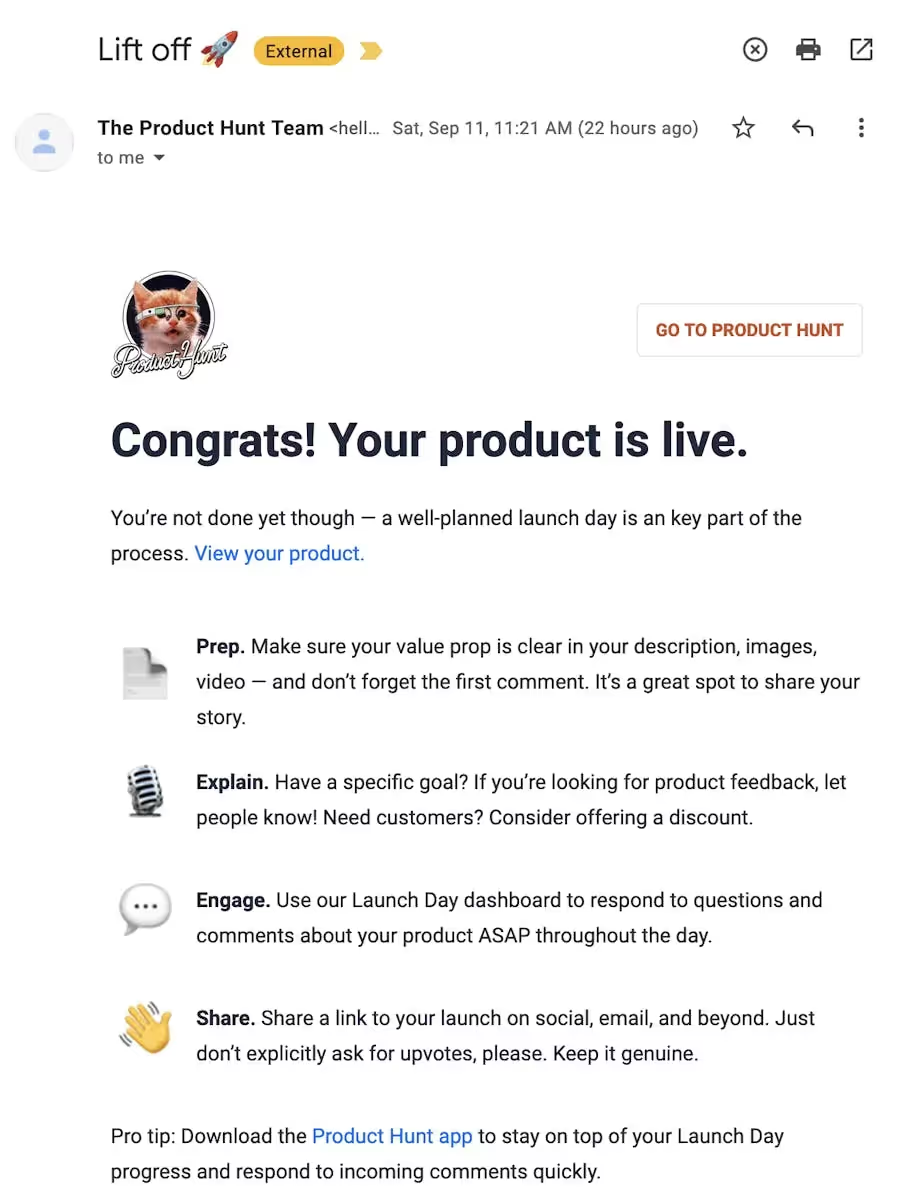
Producthunt confirmation email - Qovery Launch on PH

I heard a couple of times that launching a product on Producthunt is something that you have to prepare days before, sometimes weeks... Anyway, I do not really get why I should spend so much time filling up a title, description and put a few product screenshots. It literally took me 30 minutes to launch Qovery on Producthunt and it was 11:21 am CEST / 2:21 am PT.
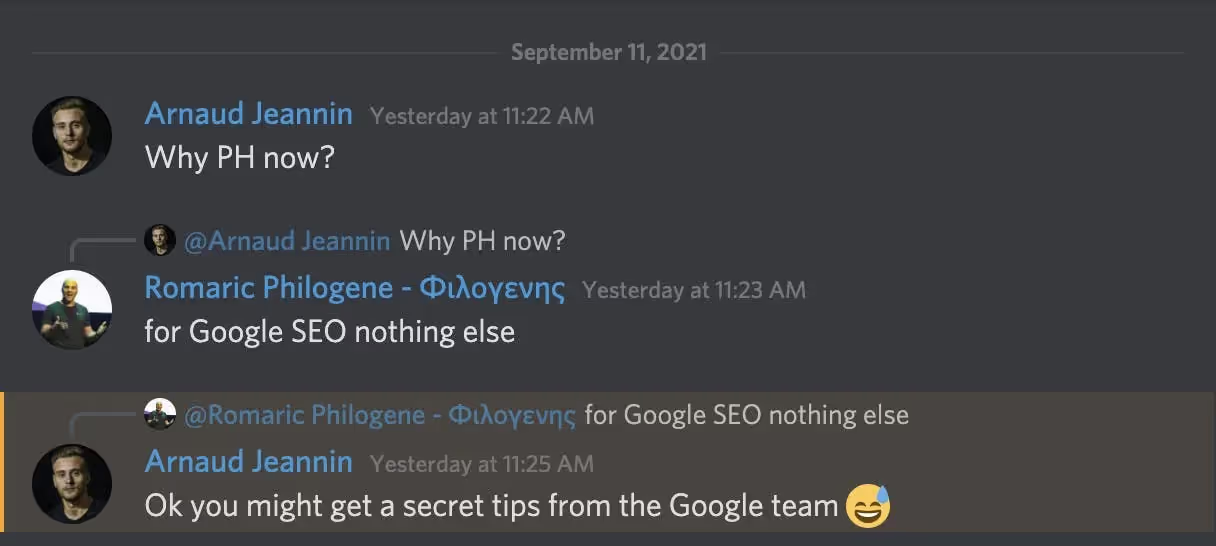
Message from Arnaud on why launching Qovery on PH now

Here we are, we launched Qovery on Producthunt. I started to receive messages from my friends saying “Congrats on your launch”. To be honest, I did not realize launching a product on Producthunt was so important. When I received dozens of messages like this, I started to understand that it was serious business from an external perspective - I decided to put some effort into reaching the first position.

To make it short, I asked our dev community to share their love on Producthunt. And the magic happened. We came from nowhere to the top 3 products of the day. Then step by step we reached the first position. It happened 12 hours later - at 11:43 pm CEST / 2:43 pm PT
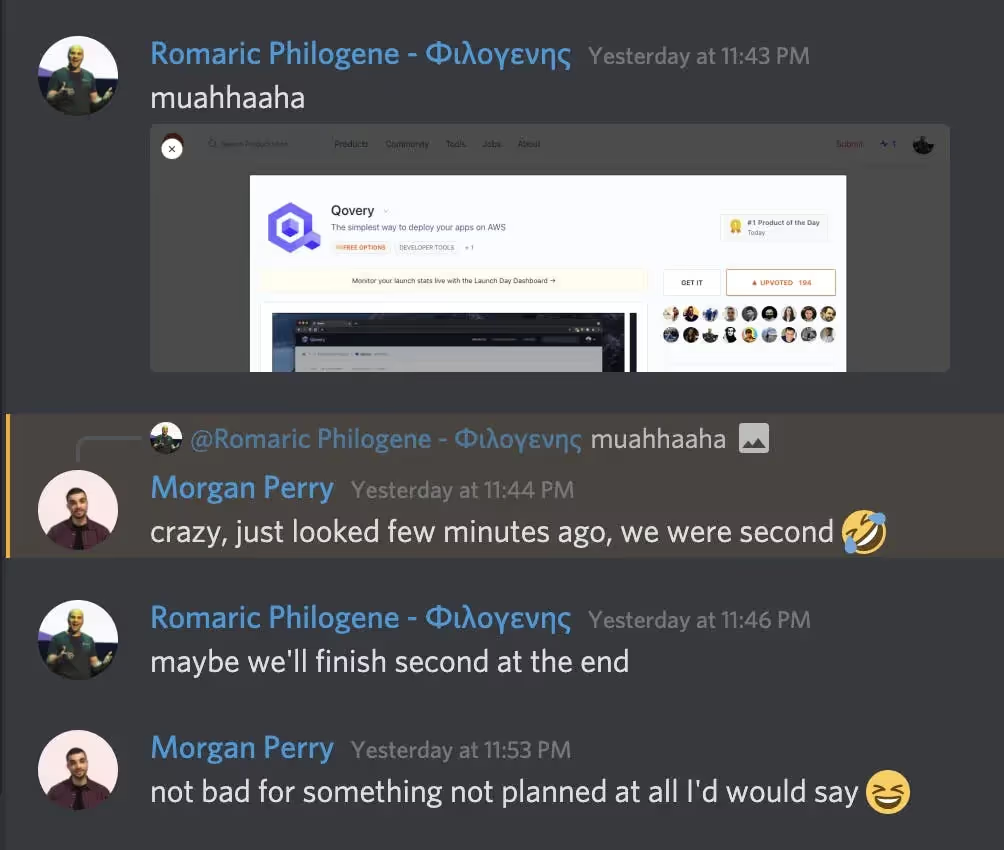
Announcement: Qovery is first on product hunt!

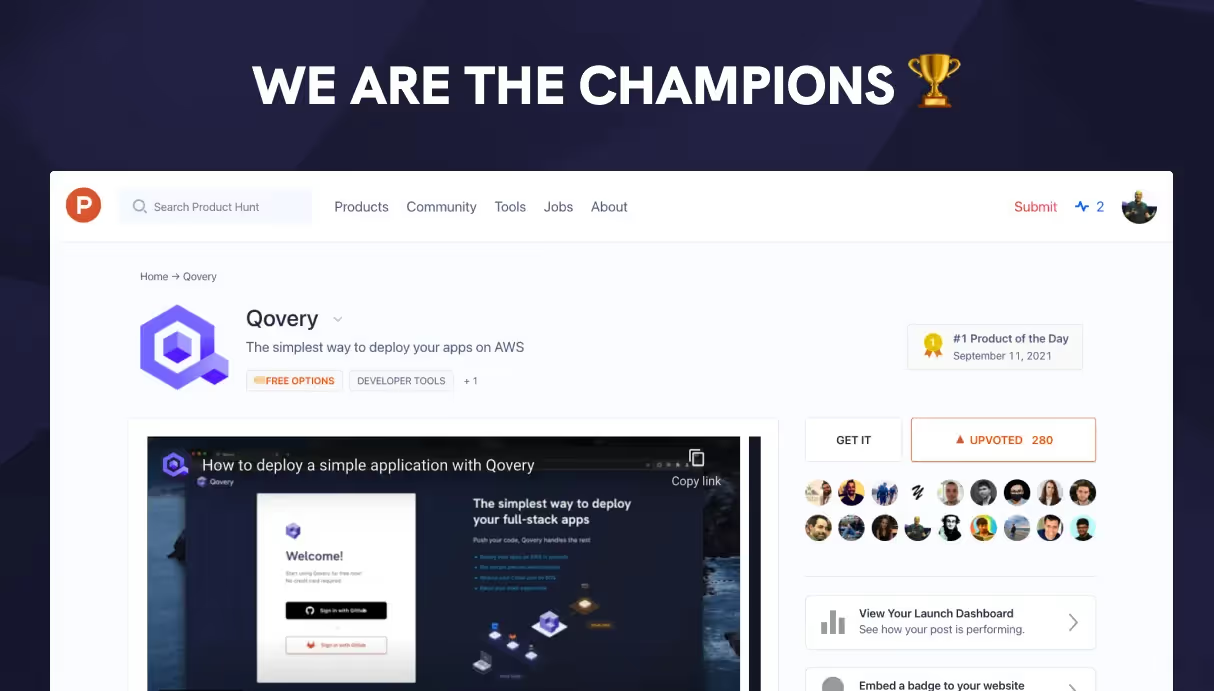
And a few hours later, we can confirm that Qovery's DevOps Automation Tool is the product of the day on Producthunt.
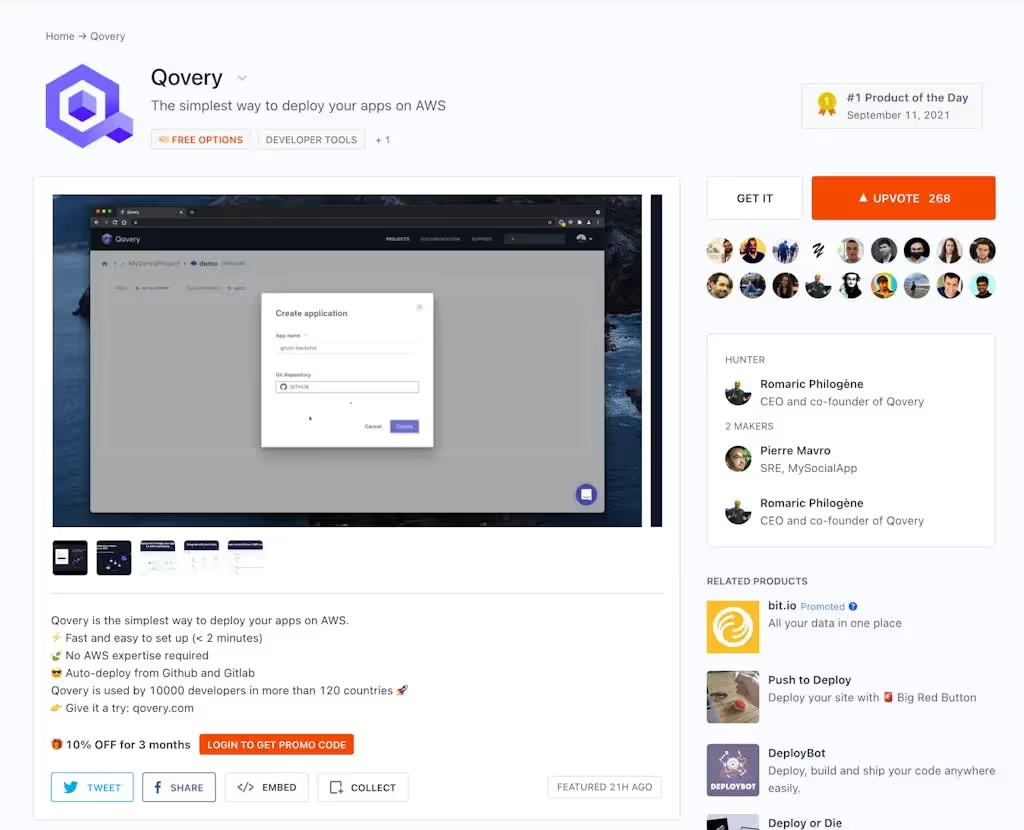
Qovery is product of the day on the 11th September 2021

Wrapping up

I feel lucky to finish "product of the day". It was only possible because we have a huge community supporting us. I would not advise you to launch your product on Producthunt if you are not well backed as we are.

I would thanks to our wonderful community (I love you so much - this success is definitely yours), our team, our investors, and friends Cyril C., Gregory Q., Georges G., the Ullink, and Techstars family.

--

Check out our producthunt page

Share on :
Twitter icon
linkedin icon
Tired of fighting your Kubernetes platform?
Qovery provides a unified Kubernetes control plane for cluster provisioning, security, and deployments - giving you an enterprise-grade platform without the DIY overhead.
See it in action

Suggested articles

Kubernetes
7
 minutes
Day 2 operations: an executive guide to Kubernetes operations and scale

Kubernetes success is determined by Day 2 execution, not Day 1 deployment. While migration is a bounded project, maintenance is an infinite loop that often consumes 40% of senior engineering capacity. To protect margins and velocity, enterprises must transition from manual toil to agentic automation that handles scaling, security, and cost.

Mélanie Dallé
Senior Marketing Manager
Kubernetes
8
 minutes
The 2026 guide to Kubernetes management: master day-2 ops with agentic control

Master Kubernetes management in 2026. Discover how Agentic Automation resolves Day-2 Ops, eliminates configuration drift, and cuts cloud spend on vanilla EKS/GKE/AKS.

Romaric Philogène
CEO & Co-founder
DevOps
Kubernetes
6
 minutes
Day-0, day-1, and day-2 Kubernetes: defining the phases of fleet management

Day-0 is planning, Day-1 is deployment, and Day-2 is the infinite lifecycle of maintenance. While Day-0/1 are foundational, Day-2 is where enterprise operational debt accumulates. At fleet scale (1,000+ clusters), managing these differences manually is impossible, requiring agentic automation to maintain stability and eliminate toil.

Morgan Perry
Co-founder
Kubernetes
7
 minutes
Kubernetes multi-cluster: the Day-2 enterprise strategy

A multi-cluster Kubernetes architecture distributes application workloads across geographically separated clusters rather than a single environment. This strategy strictly isolates failure domains, ensures regional data compliance, and guarantees global high availability, but demands centralized Day-2 control to prevent exponential cloud costs and operational sprawl.

Morgan Perry
Co-founder
Kubernetes
6
 minutes
Kubernetes observability at scale: cutting the noise in multi-cloud environments

Stop overpaying for Kubernetes observability. Learn how in-cluster monitoring and AI-driven troubleshooting with Qovery Observe can eliminate APM ingestion fees, reduce SRE bottlenecks, and make your cloud costs predictable.

Mélanie Dallé
Senior Marketing Manager
Kubernetes
 minutes
Understanding CrashLoopBackOff: Fixing AI workloads on Kubernetes

Stop fighting CrashLoopBackOff on your AI deployments. Learn why traditional Kubernetes primitives fail large models and GPU workloads, and how to orchestrate AI infrastructure without shadow IT.

Mélanie Dallé
Senior Marketing Manager
Kubernetes
Platform Engineering
 minutes
Kubernetes multi-cluster architecture: solving day-2 fleet sprawl

Kubernetes multi-cluster management is the Day-2 operational practice of orchestrating applications, security, and configurations across geographically distributed clusters. Because native Kubernetes was designed for single-cluster orchestration, enterprise platform teams must implement a centralized control plane to prevent configuration drift and manage a global fleet without scaling manual toil.

Mélanie Dallé
Senior Marketing Manager
Engineering
Product
11
 minutes
How to achieve zero downtime on kubernetes: a Day-2 architecture guide

Achieving zero-downtime deployments on Kubernetes requires more than running multiple pods. It demands a standardized architecture utilizing Pod Disruption Budgets (PDBs), precise liveness and readiness probes, pod anti-affinity, and graceful termination handling. At an enterprise scale, these configurations must be enforced via a centralized control plane to prevent catastrophic configuration drift.

Pierre Mavro
CTO & Co-founder

It’s time to change
the way you manage K8s

Turn Kubernetes into your strategic advantage with Qovery, automating the heavy lifting while you stay in control.