Build. Ship.
Learn.
Guides, deep dives, and opinionated takes on agentic infrastructure, AI agents, platform engineering, and developer experience - from the engineers building Qovery.
Published weekly. Each piece is written by an engineer, reviewed by the team, and ships only when it says something the docs don't. No fluff, no listicle padding.

Filed under
insight.
Deep technical writing on agentic infrastructure, AI agent workflows, platform engineering, compliance automation, and modern cloud operations.
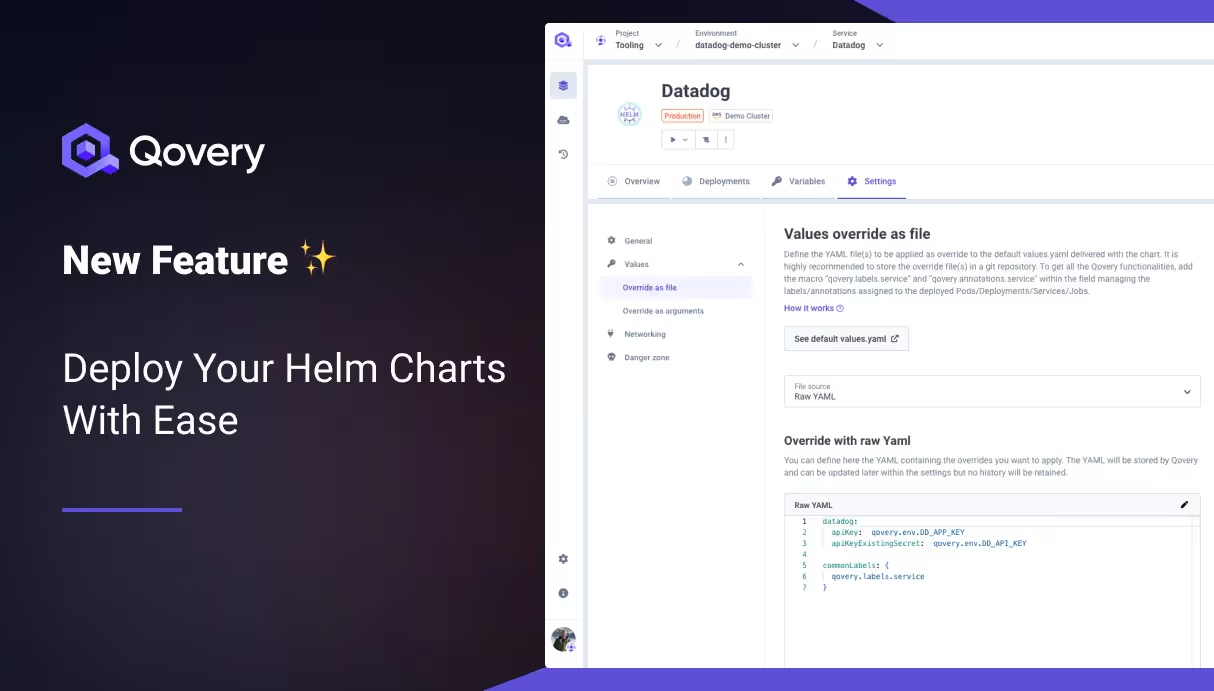
New Feature: Deploy Your Helm Charts With Ease
Today, I'm thrilled to announce a game-changing feature that's set to revolutionize how Platform Engineers and Developers interact with Kubernetes: the introduction of first-class support for Helm Charts within Qovery 🥳. This latest update, now generally available, empowers our users to deploy any Helm Chart with unparalleled ease, marking a significant leap forward in our mission to streamline application deployment for everyone.
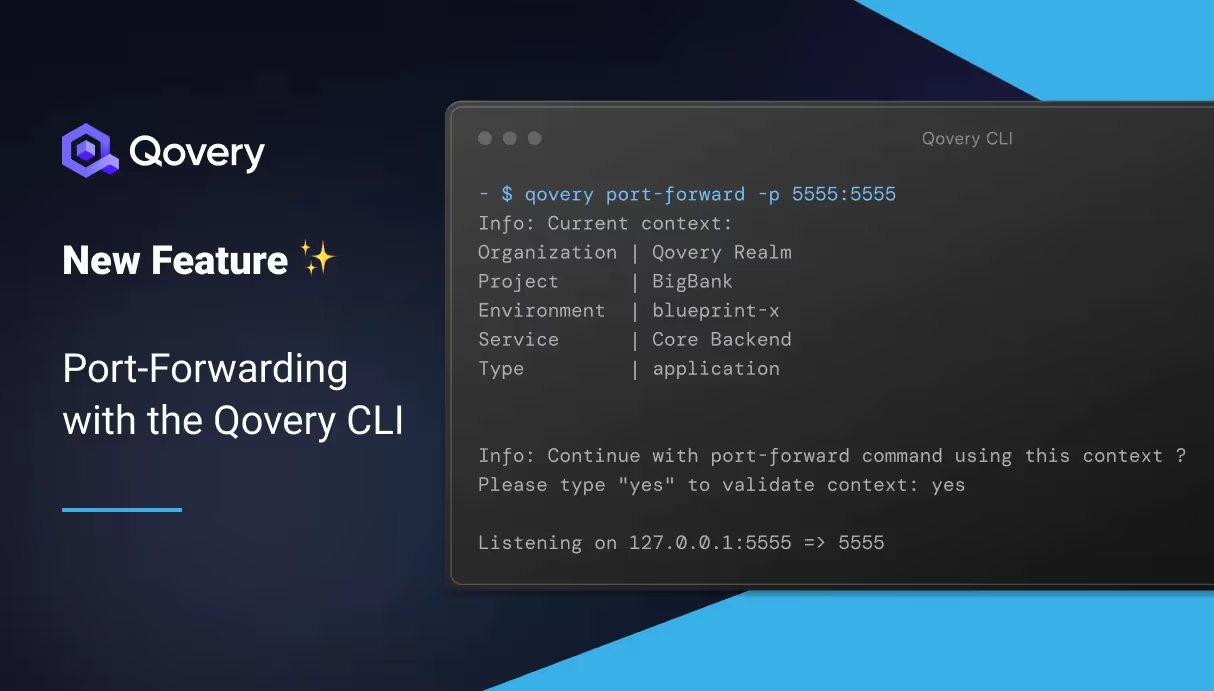
New Feature: Port-Forwarding with Qovery CLI
I'm thrilled to announce the global availability of the port-forwarding feature via the Qovery CLI (v0.77.0). This feature marks a significant stride in application access and security, allowing users to securely access not only their applications but also containers and managed databases without exposing them to the public internet. This advancement aligns with our commitment to providing developers an unparalleled experience, focusing on autonomy, security, and ease of use. In this article, I'll show and explain how this feature works... let's go 👇
Platform Engineering Predictions for 2024
I've been closely observing the trends and technological advancements in this field, and I'm excited to share my predictions for what's ahead. Here's a glimpse into the future of Platform Engineering in 2024.
3 Myths About Backstage
Backstage, an open platform for building developer portals, has been increasingly embraced by the tech community for its promise to streamline development workflows. However, there are several misconceptions surrounding its capabilities and applications. In this article, I'll debunk three common myths about Backstage to clarify its true nature.
Looking Back on 2023 and Our Plans for 2024
At Qovery, we're constantly striving to revolutionize the way platform engineers and developers experience cloud infrastructure. In 2023, we embarked on an incredible journey of growth, innovation, and customer satisfaction. Today, as we stand at the threshold of 2024, we're thrilled to share some of our most significant achievements and reveal our ambitious roadmap for the year ahead.
Common Mistakes with Rust Async
At Qovery, we start to have our fair share of Async Rust and to say the least it is not without caveats. Let’s be honest, Async Rust is hard. It has many more rough edges than Sync Rust and requires a different mindset, but it solves a problem space well, that is hard to tackle otherwise. It allows safer network concurrency than C++ Boost.Asio and I would start this post by giving a big thanks to the Tokio team & ecosystem for the amazing work they provide to the community. So this post is not to rant about Async Rust or to talk about an Async ecosystem fracture, but to share common mistakes to raise awareness and, in turn, help you avoid them.
3 Reasons Not to Use Backstage
After countless conversations with platform engineering teams, I've gathered a wealth of insights into the practicalities and pitfalls of adopting various Internal Developer Portals. One such portal, Backstage, developed by Spotify, has gained significant attention for its centralized approach to tooling and resources. However, based on my experiences and discussions, there are three key reasons why Backstage might not be the best fit for every organization, particularly smaller teams or those with certain technical constraints.
6 Essential Components of an Internal Developer Platform
Imagine a scenario where your developers spend less time waiting for resources and approvals, and more time focusing on the core aspects of building exceptional software. This vision becomes reality with the implementation of an internal developer platform (IDP), a revolutionary tool that acts as a catalyst for innovation within your organization. IDPs centralize key resources and automate workflows, empowering developers with self-service capabilities and promoting a more collaborative and efficient development environment. This empowers them to move faster, innovate more, and ultimately deliver superior software solutions. Let's explore six core elements that support successful IDPs and allow you to unlock the full potential of your development teams and drive your organization to the forefront of innovation.
The Internal Developer Platform Revolution: A CTO's Guide to Transforming Software Development
As a CTO, you need to come up with new strategies and tools to ensure that your company manages the rapidly changing world of software development. Platform Engineering and Internal Developer Platforms (IDPs) have become essential elements of this journey that change how software is developed and released. This guide will give you an in-depth understanding of Internal Developer Platforms (IDPs), showing you how they can significantly increase developer productivity and how important Platform Engineering is for handling these platforms well, all from the perspective of a CTO.
Releasing IAM EKS User Mapper in open-source
I'm super excited to share something amazing our team at Qovery has been cooking up lately: the IAM EKS User Mapper. This isn't just any tool – it's our answer to a problem we know so many of you face: managing AWS IAM user access to Kubernetes clusters efficiently and securely. It's open-source and available to everyone now on GitHub.
Kubernetes: Managed by Qovery vs. Self-Managed with Qovery (BYOK)
Qovery offers two distinct approaches to Kubernetes management: Kubernetes managed by Qovery and self-managed Kubernetes (Bring Your Own Kubernetes - BYOK). This article explores these two models, highlighting their similarities, differences, and when to use each.
DevOps vs. Platform Engineering: What's the Real Difference?
DevOps is a culture, while Platform Engineering is a practice. Discover how these two concepts differ, how they complement each other, and why a strong platform can make your DevOps teams more productive.
Inside Story: How We've Automated the Onboarding Process Experience at Qovery
Last October, we organised a Hackathon at Qovery. My teammate and I decided to work on an internal project to improve the onboarding process experience…with a limited budget! Let me tell you more about what enabled us to win the 3rd prize! (I consider that, as I was in front of developers' teams working on Qovery’s product improvements, it is not that bad ;) )
Beta Announcement: Bring Your Own Kubernetes with Qovery
Today marks a significant milestone for Qovery and a highly anticipated evolution of our product, especially among Platform Engineers and DevOps professionals. We're thrilled to announce the "Bring Your Own Kubernetes" (BYOK) offer in beta access, a transformative step in our journey towards more flexible and adaptive infrastructure management. Please keep reading to understand why we extend our offer.
Why We Replaced Redux by React Query
In the journey of front-end development, choosing the right state management solution can significantly impact the efficiency and maintainability of your application. Two popular libraries, Redux and React Query, have emerged as key players in this domain. Redux has long been the default choice for managing application state in React applications, but React Query offers a fresh and potent alternative.
7 Most Common Pitfalls When Choosing the Right Internal Developer Platform
Selecting the right Internal Developer Platform (IDP) is a critical decision that shapes the effectiveness of your software development team. An IDP empowers developers with the tools and environments necessary for efficient coding, testing, and deployment, resulting in a streamlined development workflow. However, a poor choice can lead to substantial setbacks, reducing productivity and overall business efficiency. In this article, we will discuss the most common mistakes to avoid when selecting an IDP. We will go through a practical use case for each mistake, followed by best practices to avoid this mistake in the first place.
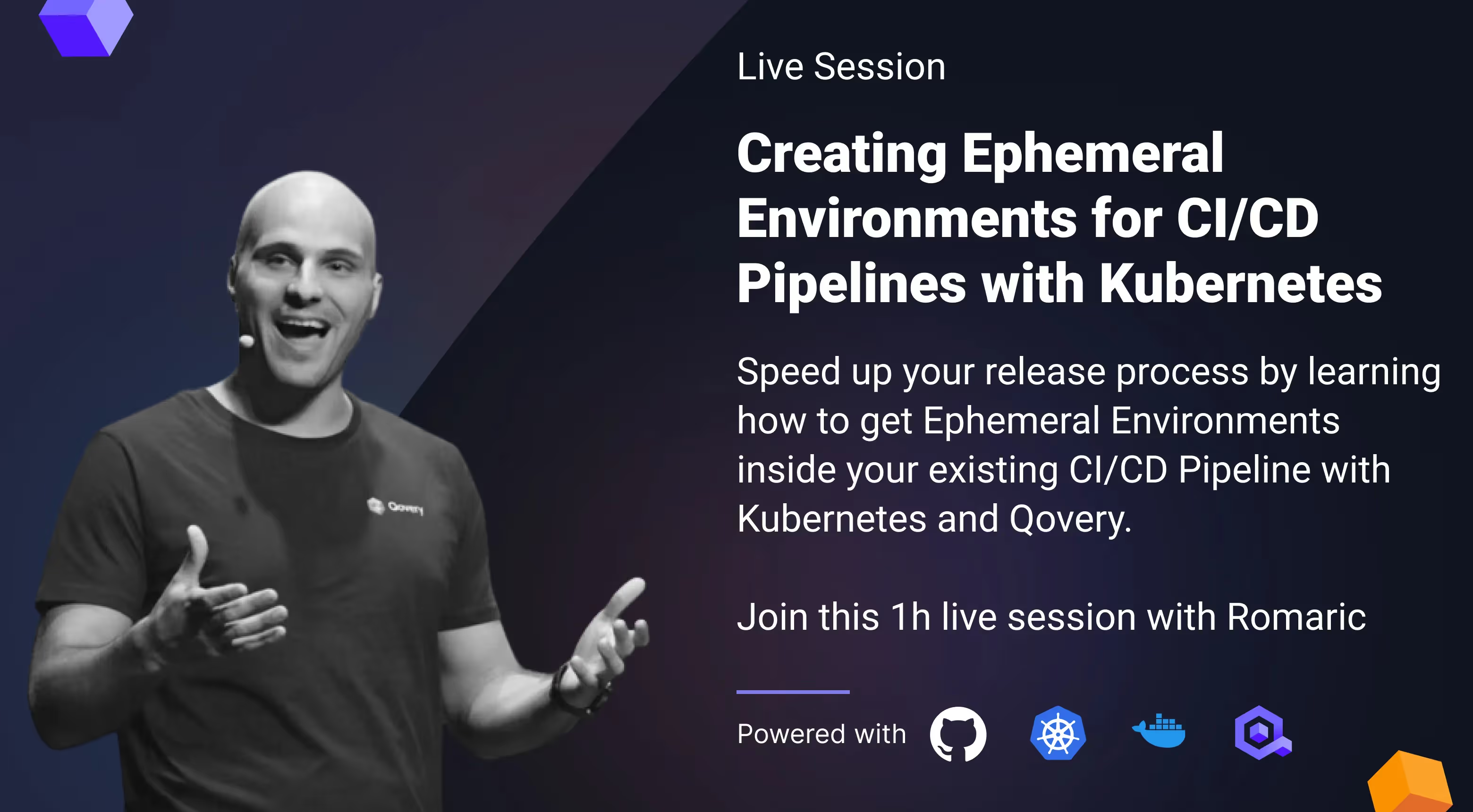
Creating Ephemeral Environments for CI/CD Pipelines with Kubernetes
In the swiftly evolving tech world, the need for agile and efficient development processes is paramount. This was the essence of our enlightening event, "Creating Ephemeral Environments for CI/CD Pipelines with Kubernetes," which garnered an impressive turnout of over 650 attendees. The event, now available on Youtube, focused on the transformative potential of ephemeral environments in modern CI/CD pipelines.
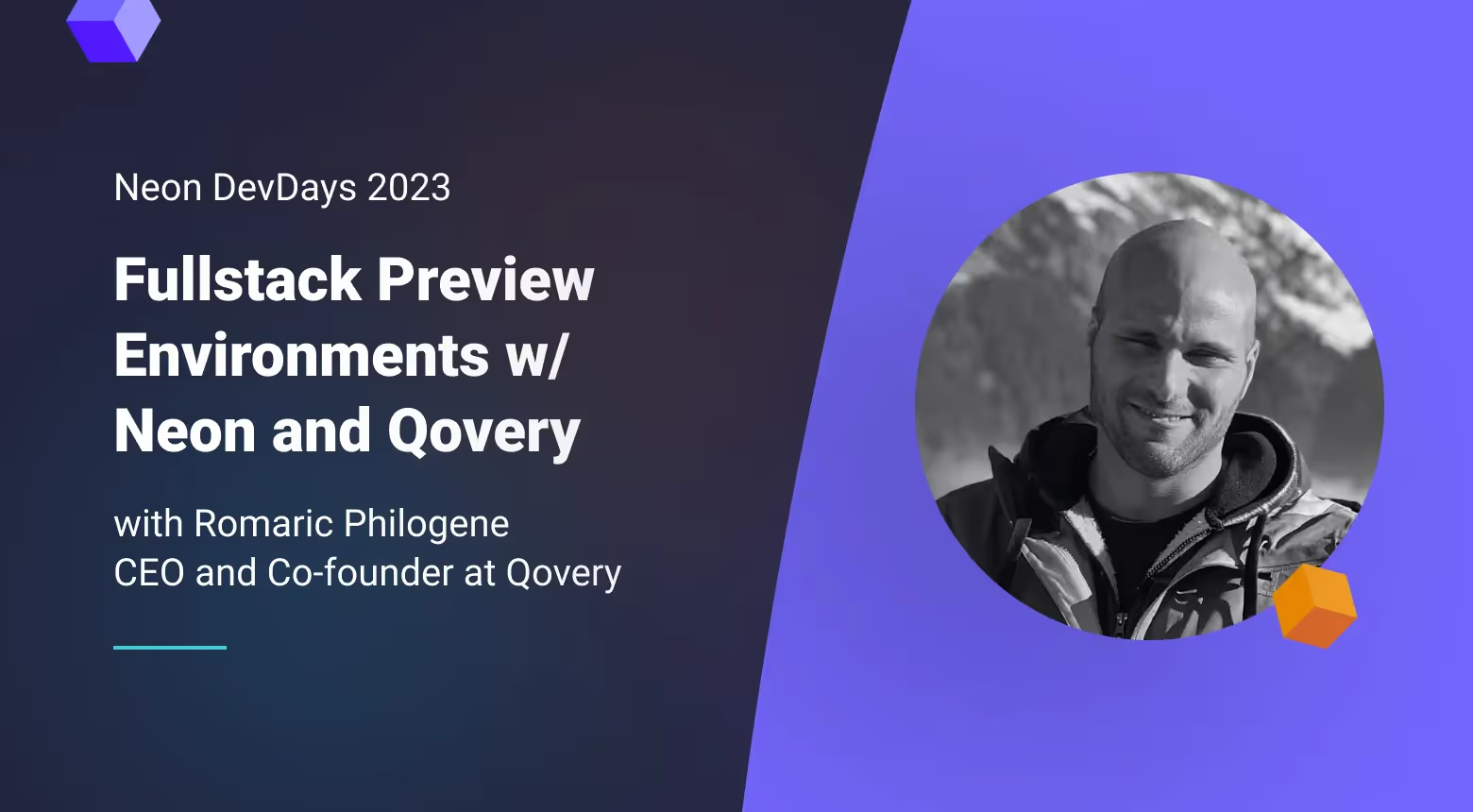
Fullstack Preview Environments with Neon and Qovery
I recently had the pleasure of speaking at Neon DevDays, where I delved into the seamless integration between Neon and our Qovery Preview Environments (also called Ephemeral Environments). Here is an article sharing some compelling reasons why this partnership is a groundbreaking step forward for our users who rely on Postgres and the record of my presentation.
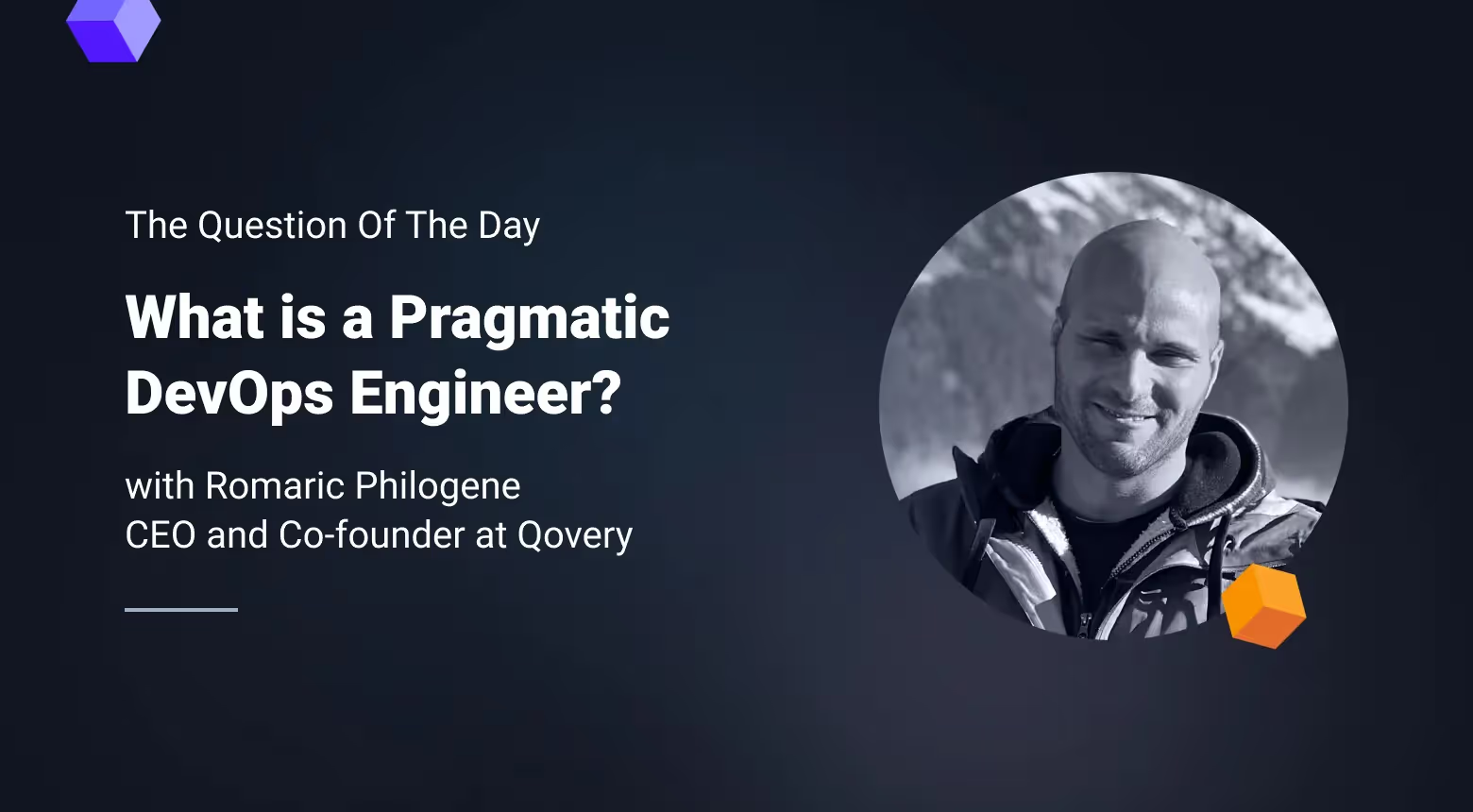
What is a Pragmatic DevOps Engineer?
The tech landscape is a whirlwind of continuous evolution, making the role of a DevOps engineer more crucial than ever. A "pragmatic" DevOps engineer stands out as a beacon of efficiency and practicality in this dynamic environment.
How We Speed Up Deployments By 30%
At Qovery, we're consistently pushing boundaries to enhance developer experiences. One of our standout achievements has been accelerating deployment times, a feat we're incredibly proud of. Today, we'd like to pull back the curtain and share how we've sped up deployments by a staggering 30% through our innovative Container Image Mirroring.
Never miss a
deploy story,
every Tuesday.
One email per week. Engineering-grade writing on agentic infrastructure, AI agents, platform engineering, and the tools that make shipping boring.
No spam. Unsubscribe anytime. We respect your inbox like we respect your uptime.