Webinar - May 21Building Regulated Infrastructure: How Lucis Standardized Security for Global Care
Platform/01 · Provision

Kubernetes,
managed like a product.

Day 1 is a fresh cluster in fifteen minutes. Day 2 is a fleet upgraded without the 2am incident call. Provision is the layer that turns your cloud accounts into a managed Kubernetes surface - across AWS, GCP, Azure, Scaleway and on-prem.

< 15 min
to first cluster
4
clouds + on-prem
1 pane
for the fleet
0
kubectl rage
Why this layer exists

Every cloud
has its own
spellbook.

EKS, GKE, AKS all work. They all work differently. Your team memorizes three instead of one. K8s upgrades are a tax you can't opt out of - every four months, a minor version ages out. On-prem is its own country.

01

Every cloud has its own ten-step spellbook

EKS, GKE, AKS all work. They all work differently. Your team memorizes three of them instead of one.

02

K8s upgrades are a tax you can't opt out of

Every four months, a minor version ages out. Every upgrade is a change-management project. You're three versions behind right now.

03

On-prem is its own country

One regulated customer asks for on-prem. Suddenly you're maintaining two platforms, two runbooks, two on-call rotations.

What Provision gives you

Clusters,
on command.

Six capabilities that turn your cloud account into a managed Kubernetes surface. Opinionated defaults. Configurable when it matters. Never magic.

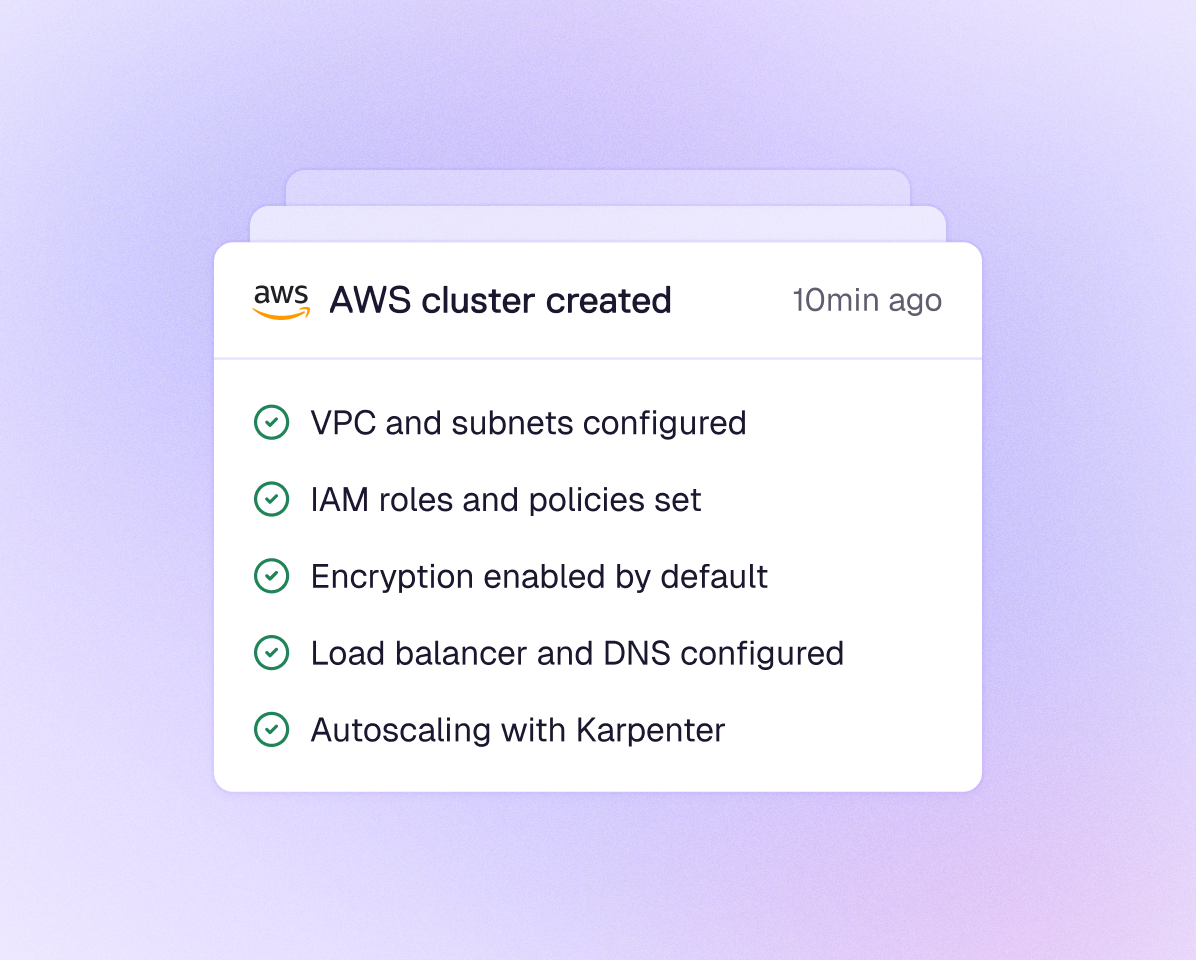
01One-click clusters

EKS, GKE, AKS, or Scaleway Kapsule - provisioned end-to-end with VPC, IAM, logging, ingress. Under fifteen minutes, typical.

02On-prem & BYO clusters

Bring your existing K8s cluster - EKS anywhere, OpenShift, K3s, bare metal. Qovery runs on top, not instead of.

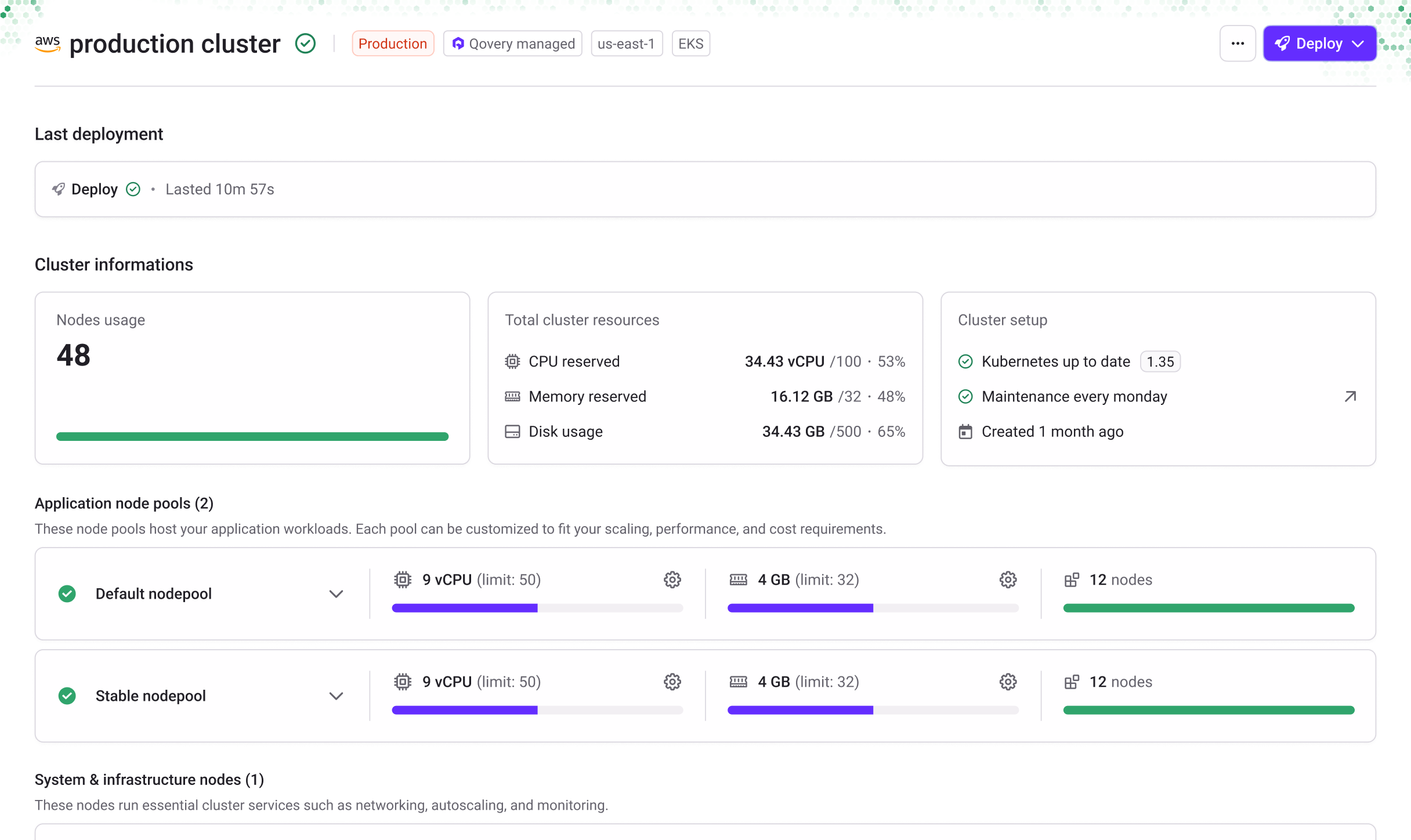
03Fleet dashboard

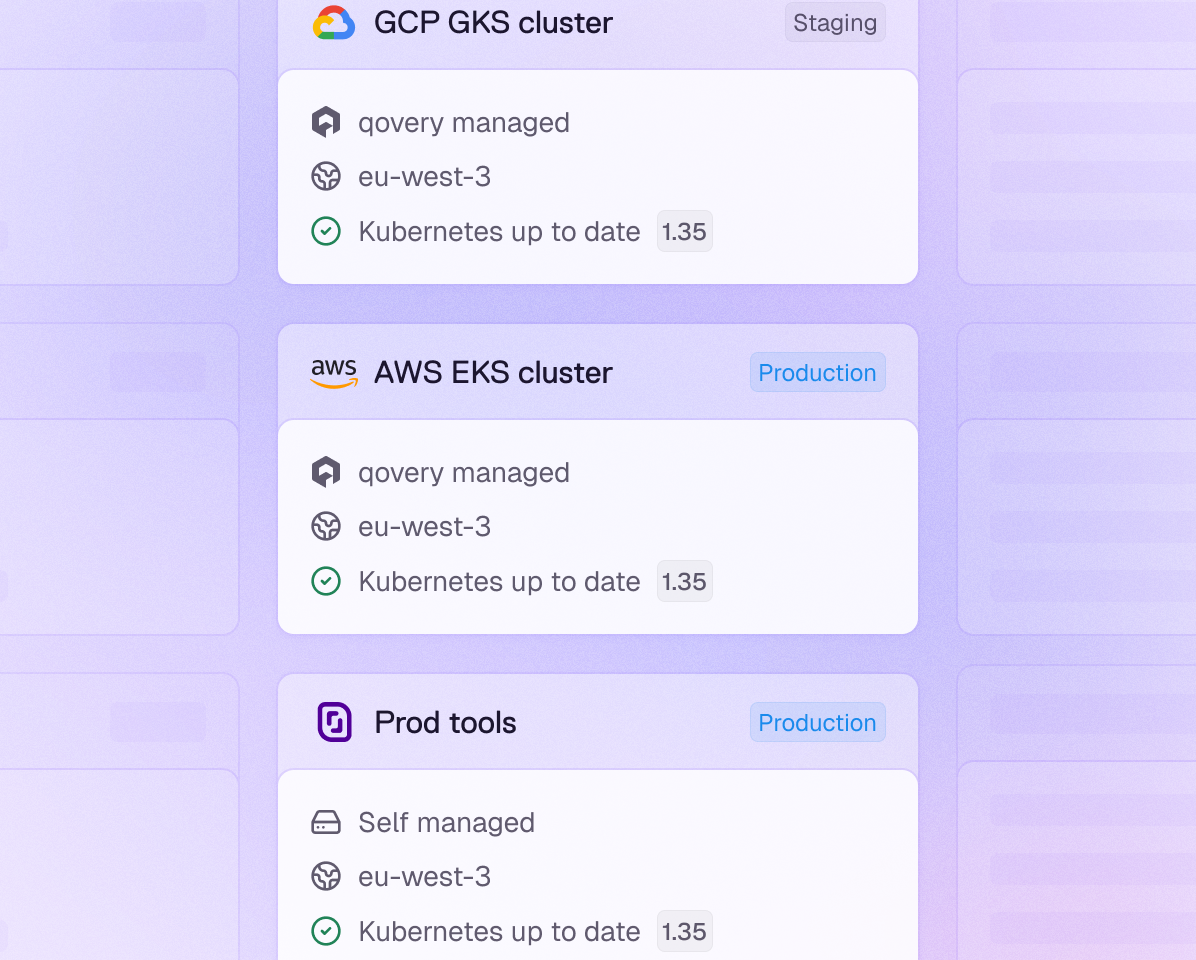
Every cluster, every version, every workload in one table. Drift, cost, capacity, at a glance.

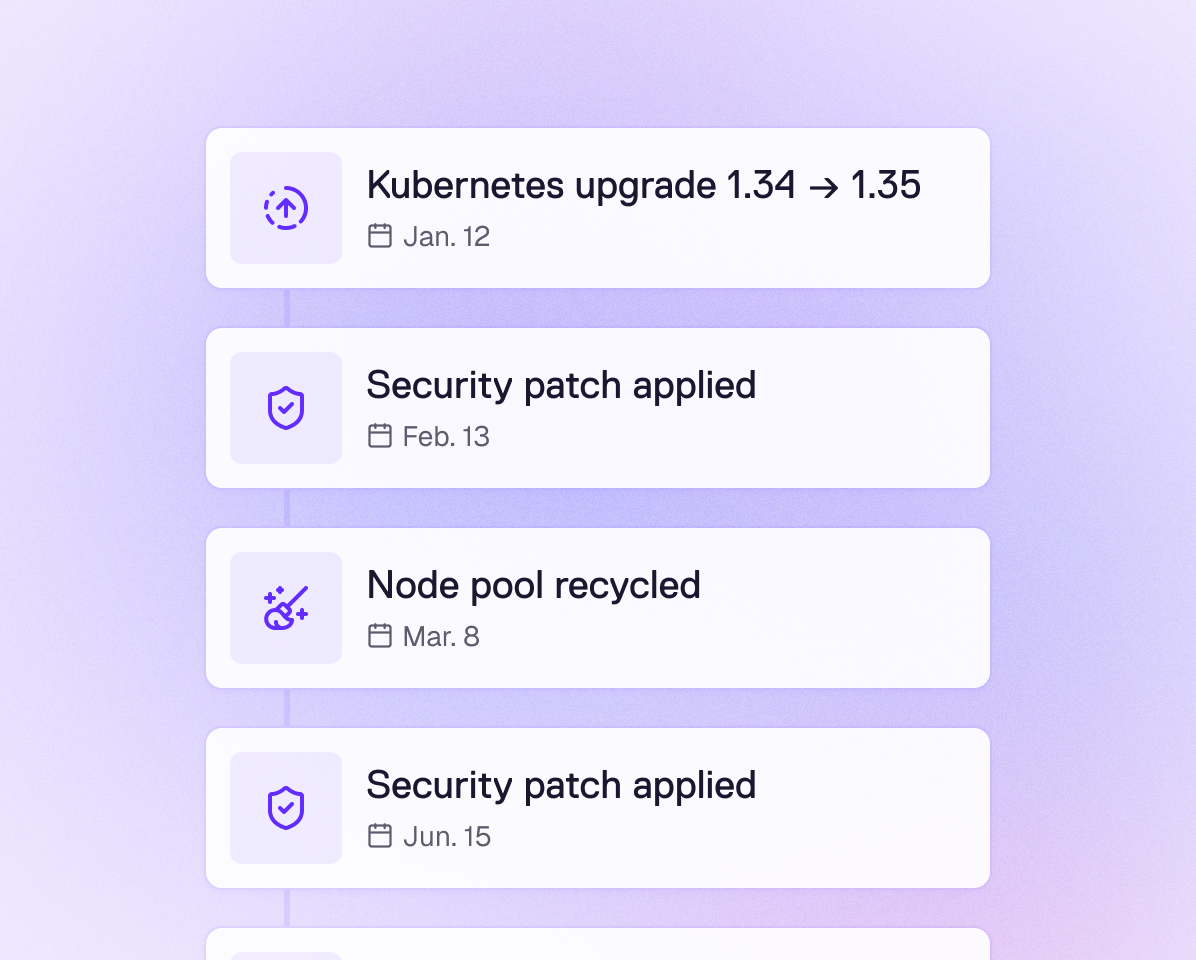
04Orchestrated upgrades

Drain, upgrade, validate. Control plane then nodes. Canary one cluster before the rest. No 2am.

05Node-group lifecycle

Spot, on-demand, GPU - mixed groups with warm pools and graceful draining. The autoscaler respects your cost policy.

06Platform add-ons

Ingress, cert-manager, external-dns, monitoring agents - installed and upgraded as part of the platform. Not your side project.

Runs anywhere

Your clusters,
your choice.

Provision is provider-native. It calls the real APIs, writes the real IAM policies, manages the real nodes. No abstraction layer that breaks on day 2.

AWS EKSNATIVE

VPC, subnets, NAT, IRSA - provisioned to AWS best-practice by default.

GCP GKENATIVE

VPC-native, Workload Identity, managed node pools. Autopilot-aware.

Azure AKSNATIVE

VNET integration, AAD pod identity, managed disks. Familiar to Azure teams.

Scaleway

Kapsule clusters. EU-sovereign, GDPR-friendly. No hyperscaler dependency.

EKS-A

On-prem EKS Anywhere clusters managed from the same fleet dashboard.

OpenShift

BYO OpenShift clusters. Qovery layers on top - workloads, deploys, RBAC.

K3s

Lightweight edge clusters. Single-node or HA. Great for dev, great for IoT.

Bare metal

Your hardware, your datacenter. Qovery manages the lifecycle, you own the rack.

AI Agentic Layer

The agent
manages the fleet.

The Agentic layer is the interface between your platform team and your cluster fleet. Upgrade, scale, troubleshoot - from a prompt, with a review step, logged for audit.

$ Upgrade our prod fleet from 1.29 to 1.30, canary eu-west first, hold US until EU is green for 24h.
Scan fleet · 4 clusters · 2 regions · all on 1.29.3
Pre-flight: compatibility matrix for 1.30 · 0 breaking changes detected
Phase 1: canary eu-west-1 (prod-eu) · drain, upgrade CP, upgrade nodes
Hold phase: monitor error rate and p95 for 24h · alert on regression
Phase 2: roll us-east-1 (prod-us) · same sequence · awaiting approval
DRIFT

Detects drift before you do

Different K8s versions, mismatched add-ons, orphan node groups - the agent flags it in your weekly report, not your incident log.

PLAN

Plans the upgrade for you

Which cluster first. How long to soak. What to watch. The agent writes the plan; you approve the phases.

EXPLAIN

Explains the cluster

Ask why a node group scaled, where costs spiked, or what changed since Tuesday. The agent cites the event log, not a guess.

"We have eleven clusters across AWS, GCP, and a customer's on-prem environment. Before Qovery, that was 2 FTEs. Now it's one person, one dashboard, one upgrade per quarter instead of eleven."
Sara Chen, SRE Lead · Talkspace

Stop babysitting
kubectl.

Give Qovery your cloud credentials and a cluster name. Get back a production-ready Kubernetes cluster in under fifteen minutes.