


Top 10 Rancher alternatives in 2026: Beyond cluster management


Key Points:
- Beyond "Cattle Herding": Rancher excels at basic fleet management, but enterprises are shifting to Kubernetes Management Platforms like Qovery that integrate Developer Experience (DX) and automated governance.
- The Rise of Specialized Tools: The market has segmented. Spectro Cloud wins on Edge/Fleet, Platform9 on SaaS-Managed Ops, and Qovery on Platform Engineering/IDP.
- TCO Matters: "Free" open-source Rancher often incurs high operational costs (headcount). Managed platforms reduce this "hidden tax" by automating Day 2 operations and security compliance.
Rancher was the default for launching Kubernetes clusters, but modern platform teams need more than just fleet management.
The focus has shifted to Kubernetes Management Platforms that handle the full lifecycle (Internal Developer Platforms (IDP), governance, and AI infrastructure) without the operational maintenance.
The "Day 2" Problem with Rancher
In 2018, Rancher solved the "Day 1" problem: launching clusters everywhere. In 2026, the bottleneck isn't launching clusters; it's managing the chaos on top of them.
For many teams, Rancher has become a maintenance burden. It requires a dedicated team just to keep the management plane running, upgrades can be fragile, and it stops short of the application layer. You’re left bridging the gap between the cluster and the developer yourself.
Modern Kubernetes Management Platforms bridge that gap. They move beyond basic "cattle herding" to provide:
- Application-Centric Workflows: Managing services, not just nodes.
- Automated Governance: Security and cost policies that apply out of the box.
- AI/GPU Readiness: Direct hardware access for AI models without middleware bloat.
- Zero-Maintenance Control Planes: SaaS architectures that eliminate "managing the manager."
Here are the top 10 alternatives, from modern IDPs like Qovery to enterprise incumbents.
Top 10 Rancher Alternatives & Competitors
1. Qovery – The "Vertical Upgrade"
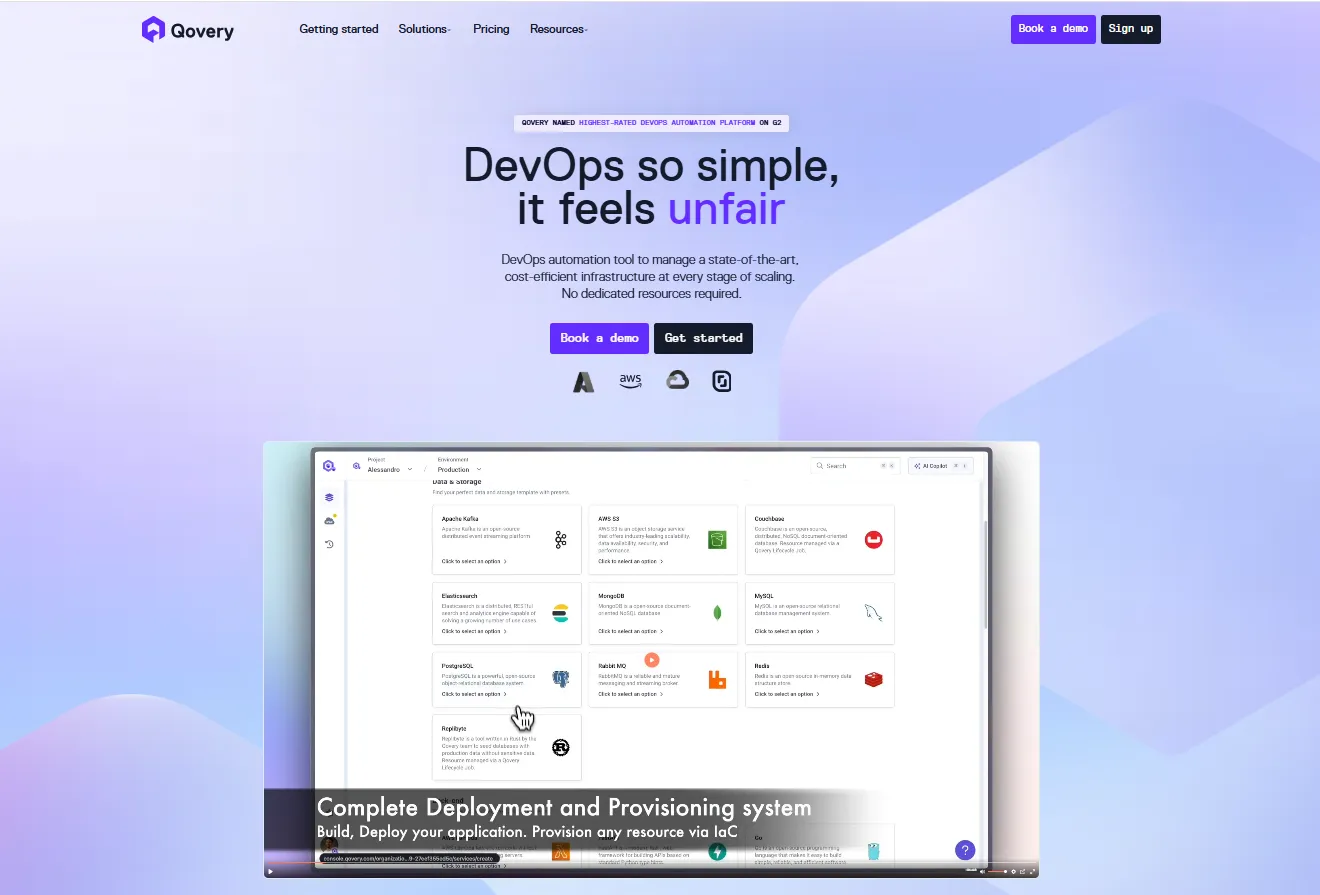
Best For: Teams who want to stop managing clusters and start shipping applications.
The Strategy: Rancher is a tool for Cluster Admins. Qovery is a tool for Developers. Instead of just giving you a dashboard to manage nodes (like Rancher), Qovery sits on top of your cloud (AWS/EKS) and provides a complete Internal Developer Platform. It handles the "Day 2" maintenance, security patching, and scaling automatically.
Pros:
- Zero Maintenance: Qovery is a SaaS control plane. You never have to patch the management server.
- Developer Focus: Built-in Preview Environments and "Clone Database" features that Rancher lacks.
- Financial Governance: FinOps visibility down to the individual microservice.
Cons:
- Not for Air-Gapped: Qovery requires connectivity to the control plane. If you need a strictly offline tool (e.g., for defense), stick with Rancher.
- Scope: It manages Applications and Dependencies, not bare-metal OS flashing.
The Bottom Line: Choose Qovery if you want to stop managing clusters and start managing a Platform.

2. Red Hat OpenShift
Best For: Banks and Gov requiring strict FIPS compliance on-premise.
The Strategy: OpenShift is an entire operating system for your cloud. It provides a "Batteries Included" approach where logging, monitoring, and CI/CD are pre-integrated.
Pros:
- Compliance: The gold standard for highly regulated industries.
- Support: Red Hat's support ecosystem is unmatched.
Cons:
- The "Tax": It is expensive (per core licensing) and resource-heavy.
- Lock-in: Migrating away from OpenShift is significantly harder than migrating from Rancher.
Read more: Top 10 Openshift altnernatives
3. Spectro Cloud (Palette)
Best For: Managing "Bare Metal" to "Edge" fleets (e.g., 5,000 retail stores).
The Strategy: Spectro Cloud has modernized the Rancher model. It uses "Cluster Profiles" to model the entire stack (OS + K8s + Logging) and stamp it out across thousands of locations.
Pros:
- Edge Optimized: Incredible for managing low-connectivity devices.
- Full Stack: Manages the underlying Operating System (OS), which Rancher struggles with.
Cons:
4. VMware Tanzu
Best For: Enterprises running vSphere On-Premise.
The Strategy: If your organization runs on VMware, Tanzu integrates Kubernetes directly into the vSphere hypervisor. It allows legacy Ops teams to manage K8s using vCenter.
Pros:
- Familiarity: Ops teams don't need to learn Linux CLI; they can use vCenter.
- Integration: Native access to vSAN and NSX.
Cons:
- Broadcom Risk: Recent licensing changes have made Tanzu significantly more expensive and uncertain.
Read more: Top VMware Tanzu alternatives
5. Platform9
Best For: Running Kubernetes on your own physical hardware without an Ops team.
The Strategy: Platform9 offers a SaaS control plane that remotely manages your on-premise servers. They take responsibility for the SLA of the control plane.
Pros:
- SLA: They handle the upgrades and patching, reducing your operational risk.
- Bare Metal: Brings the "Cloud Experience" to your private data center.
Cons:
- Connectivity: Requires a persistent connection to their SaaS (can be a blocker for some secure sites).
6. Rafay
Best For: Platform teams enforcing strict standardization across shared services.
The Strategy: Rafay competes on governance. It focuses heavily on OPA (Open Policy Agent) to ensure every cluster complies with security rules before it launches.
Pros:
- Governance: Deep blueprinting features for large enterprises.
- Multi-Tenancy: Excellent isolation for shared clusters.
Cons:
- Overkill: Too complex for mid-sized organizations just wanting to ship code.
7. Portainer
Best For: Small teams or Homelabs needing a simple UI.
The Strategy: If Rancher is a battleship, Portainer is a speedboat. It is a lightweight container that gives you a UI for Docker and K8s.
Pros:
- Simplicity: Installs in seconds. Great for visualization.
- Cost: Free/Cheap for small scale.
Cons:
- Limits: Lacks deep Platform Engineering features (GitOps, Ephemeral Environments).
Read more: Top Portainer alternatives
8. Mirantis
Best For: Organizations with legacy Docker Swarm or OpenStack workloads.
The Strategy: Mirantis acquired Docker Enterprise. They are the go-to for supporting mixed environments of Swarm and Kubernetes.
Pros:
- Swarm Support: The only major enterprise platform that still supports Swarm.
- OpenStack: Deep expertise in telco-grade OpenStack.
Cons:
- Dated: The ecosystem feels less modern than Cloud-Native tools.
9. Nomad (HashiCorp)
Best For: Teams who don't actually need Kubernetes.
The Strategy: Nomad is not Kubernetes. It is a single binary scheduler that can run containers and legacy binaries.
Pros:
- Simplicity: Drastically simpler to manage than a K8s control plane.
- Legacy: Can run Java JARs and binaries natively.
Cons:
- Ecosystem: You lose access to the massive K8s ecosystem (Helm, Operators).
10. The Hyperscalers (EKS / GKE / AKS)
Best For: Teams moving 100% to the Public Cloud.
The Strategy: The biggest competitor to Rancher is simply not using a manager. AWS and Google have improved their native consoles significantly. If you are all-in on one cloud, you might not need an overlay tool.
Pros:
- Cost: No licensing fees (just pay for usage).
- AI Integration: Native access to TPUs/GPUs and autoscalers (Karpenter).
Cons:
- Fragmentation: If you use both AWS and Azure, you have two different workflows.
- No DX: You still need to build an Internal Developer Platform (like Qovery) on top.
Conclusion: Choosing the Right Management Layer
The decision comes down to where you want to spend your engineering budget.
- For Fleet Management (Edge/Hybrid): Spectro Cloud or Rancher are solid choices for managing the nodes.
- For Developer Velocity & Platform Engineering: Qovery is the superior Kubernetes Management Platform. It abstracts the cluster complexity to deliver a ready-to-use Internal Developer Platform, cutting TCO and operational noise.
- For Legacy/VMware Shops: Tanzu remains the logical, albeit expensive, choice.
Stop Managing Clusters. Start Delivering Value.
Don't let your Kubernetes strategy just be about keeping the lights on. Move to a Kubernetes Management platform that automates the Ops, secures the flow, and empowers your developers.


.svg)
.svg)
.svg)

Suggested articles


At enterprise scale, managing provider-specific Kubernetes YAML across multiple clouds creates crippling configuration drift and operational toil. By adopting an agentic Kubernetes management platform, infrastructure teams abstract cloud-specific configurations (like ingress controllers and storage classes) into a single, declarative intent that automatically reconciles across 1,000+ clusters.

To stop GPU costs from destroying SaaS margins, teams must transition from static to consumption-based infrastructure by utilizing Karpenter for dynamic provisioning, maximizing hardware density with NVIDIA MIG, and leveraging Qovery to tie scaling directly to business metrics.
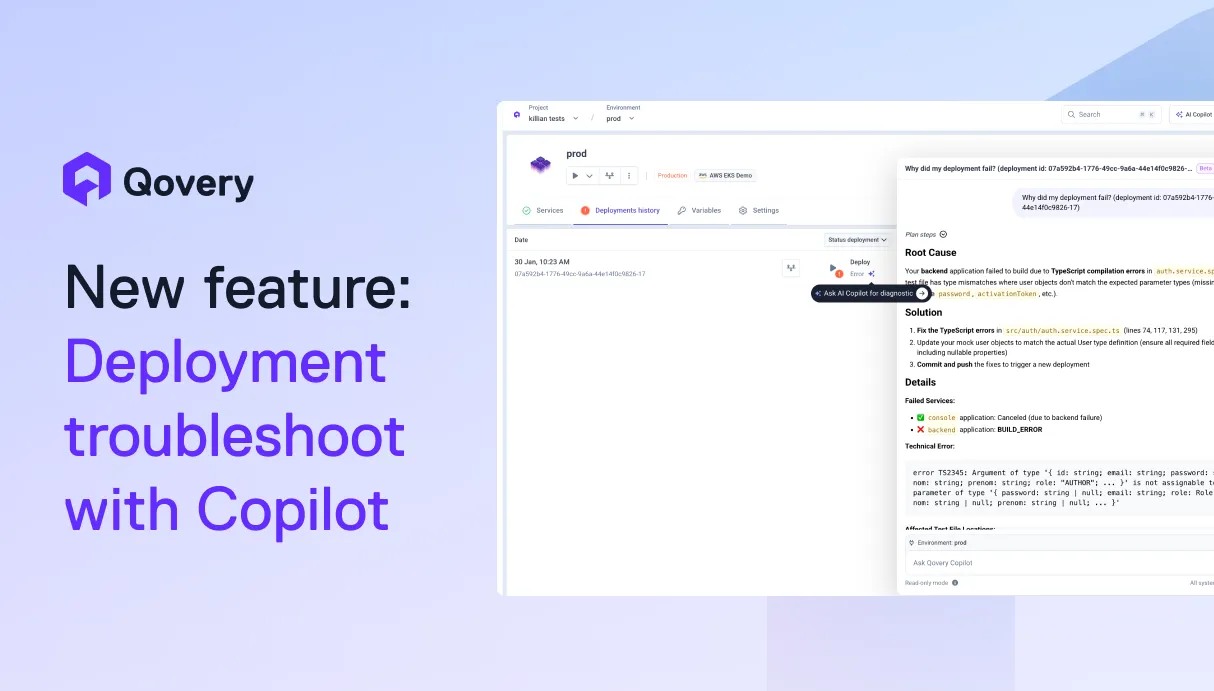
AI is helping developers write more code, faster than ever. But writing code is only half the story. What happens after? Building, deploying, debugging, scaling. That's where teams still lose hours.We're building Qovery for this era. Not just to deploy your code, but to make everything that comes after writing it just as fast.



By adopting GitOps and utilizing management platforms like Qovery, fintech teams can automatically generate DORA-compliant audit trails, transforming regulatory compliance from a manual, time-consuming chore into an automated, native byproduct of their infrastructure.
Kubernetes success is determined by Day 2 execution, not Day 1 deployment. While migration is a bounded project, maintenance is an infinite loop that often consumes 40% of senior engineering capacity. To protect margins and velocity, enterprises must transition from manual toil to agentic automation that handles scaling, security, and cost.
Day-0 is planning, Day-1 is deployment, and Day-2 is the infinite lifecycle of maintenance. While Day-0/1 are foundational, Day-2 is where enterprise operational debt accumulates. At fleet scale (1,000+ clusters), managing these differences manually is impossible, requiring agentic automation to maintain stability and eliminate toil.


.webp)